
Sunday, 8 March 2015

Thursday, 26 February 2015
Anzac paintings and silhouettes
 We introduced warm colours, tints and shades after learning the colour wheel and made it a cross curricular lesson by integrating it with our HSIE lesson on the Anzacs.
 Thursday, 19 February 2015
Skipping
Looking around the playground on morning duty I saw the cutest, most lovely interactions between the kids playing really old fashioned games my grandparents possibly played- elastics, handball, a cup and clapping game I couldn't quite work out and skipping.
As it's sports day tomorrow and there's a whole crate full of skipping ropes in the sports press, I thought I'd drag them out and allow the kids of various abilities to have a go. I've numbered the activities from easiest to most difficult:
1. Snake- for kindy and kids who need lots of scaffolding. Two kids just wobble the rope on the ground for the jumper to hop over
2. Individual jumping backwards and forwards, try it hopping and jumping
3. Individual cross over with rope
4. Big rope start in middle
5. Big rope run in
6. Double dutch
Easy as pie PE lessons the kids have a chance to goal set and chose their own challenges. They can also make up their own little poems and chants as they go.
Monday, 16 February 2015
Maths and fitness
As any teacher in any school anywhere in the world will tell you; there's just so much to fit into an expanding curriculum. As our children become less active, teachers have to find more innovative ways to fit in physical activity into the day.
Today, as we went out for daily fitness, I decided not to cut short our maths plenary and printed off the maths questions I wanted the kids to answer to check their learning progress.
I simply clipped up the printed sheets and had kids do relays to the end of our tennis court, attempt one of the questions and then run back to their team and tag the next person.
It's not something we could do everyday, but it was an easy solution to finding enough time in today.
Friday, 13 February 2015
Meaningful vocabulary
Resplendent, abode, precipice, despairing and narrer are all lovely words that aren't common in an 11 year old's vocabulary but will feature in our poem next week.
I thought to get them interested in the words, I'd play a little game as a starter. I'm writing the same word on three cards, then on the back writing the real meaning on one card and false meanings on the other two and as a group, they decide what is the real meaning.
You could also play the game after the poem is read to see of they can work it out by context.
Simples! Xx
Thursday, 5 February 2015
Origami procedures
I needed to get some cups for an activity but I'm a bit reluctant to continuously dip into my own pocket. I intended to have the children fill a bucket; every child has a little cup (a bucket) and each day they draw a name out of a hat written on a post it, on the back of the post it, they say something positive about something positive they noticed about that child- anything positive, I like that you used your manners at the canteen, thanks for letting me play with your tennis ball etc. I gave the children a piece of square paper and we checked out an online video tutorial and made an origami open box for our "bucket", then we wrote up the procedure in English. Simples!
The buckets were all pinned onto an old cork board with thumb tacks and the children love going to check what message awaits.
Wednesday, 4 February 2015
Place value


Sunday, 25 January 2015
Australia Day
As we will be returning from school straight after Australia Day, I'll be brining in books from the library that link to dreamtime stories.
I'll ask the students to write their own narrative based on a dreamtime story of their choice and make artworks linked to their story.
This can also be extended into dance and students can work in groups to make their own dreamtime dance.
Wednesday, 21 January 2015
Happy new year!
Happy 2015. I've been very busy in last few months so have decided, I'll post twice a week each week until the end of this year.
This year I'm on a 5/6 composite class and to start the year off, the students are only in class Wednesday and Thursday. My display boards are drab and I want to cover them immediately, so we are going to be talking about what we want to get out of the school year and writing ideas on post it notes. A perfect, fuss free PSED lesson that can extend into drama and talking and listening as the children present their ideas. :)


Friday, 10 October 2014
Predicting the future
Using the ipad, you can download some age booth applications and take pictures of the kids to show what the app guesses they will look like in old age. It's a very fun way to talk about growth and change with younger kids.

You can then use the photo as a writing prompt for the children to talk about what they expect their lives to be like when they are in old age.
Lego symmetry
How cool is Lego? It enhances creativity, improves fine motor skills, facilitates cognition and so much more.
A great way to use Lego is to use it to teach symmetry. After leaning about lines of symmetry and rotational symmetry, use some Lego to allow children to show their understanding. It might also be nice to get them to work in pairs to get the full cooperative learning benefits.
A great way to use Lego is to use it to teach symmetry. After leaning about lines of symmetry and rotational symmetry, use some Lego to allow children to show their understanding. It might also be nice to get them to work in pairs to get the full cooperative learning benefits.
Thursday, 9 October 2014
Learning about senses through popcorn
I'm currently taking a K-1 class for a 4 week block. They're a wonderful class and make me laugh and really enjoy what I do.
Their current science topic is "Senses" ie, taste, touch, smell, sight and hearing. It is such a great cross curricular topic such as with Maths when they identified sound patterns today and English when they used adjectives to describe the things in their environment.
After checking with the school about any possible allergies, we got the green light for a fun Friday afternoon activity that fits right in with their topic: popcorn making!
After taking in my popcorn maker and making popcorn with the children I plan for us to make poems about the popcorn we made into the following week. We are going to write observations about the cause and effect of warming the dried kernels, descriptions of the popcorn's taste, feel, smell, appearance and sounds it makes, weighing and hefting "popped" corn and dried kernels in maths and what I'm most looking forward to, turnin popping corn into HOPPING CORN!
Hopping Corn is one of the most fun science experiments I know. You just need:
- a clear jar
-some dry kernels
-30g baking soda
-90ml White vingar
-750ml water
Then fill up your jar with the water and mix in baking soda until it disappears. Then add the kernels and add vinegar. This is when the kernels bob up and down like they are hopping! It is caused by the gas (co2) made from the vinegar and baking soda mixing.
Talk about about the senses they used in the experiment and write about it in their books. Keep language at their level and let them ask questions and try different things like shaking the mix or stirring it. Investigative learning made simple and fun.
Sunday, 21 September 2014
Playing card fractions
Whilst playing yet another playing cards maths game, I had an idea for another way to use this versatile resource in another way. Converting irregular fractions! Just pair the children up and give them a deck. Place 2 cards one above the other. The top is the numerator and the bottom, the denominator. Does the fraction require converting? If so children race to convert the irregular fraction and record their working. Simples :) 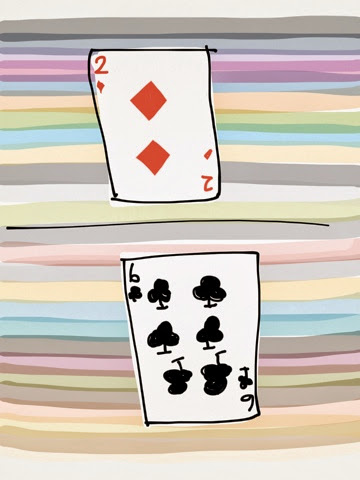
Friday, 12 September 2014
Quiz and quieten
Sometimes a class is not necessarily off task but really loud. As a personal preference, I don't even mind if students are talking. It does not bother me at all but when those little voices turn into big voices it becomes a bit much. Naggy reminders and clapping patterns become like water off a ducks back after a while so I like to do something a bit different and keep it fun: quizzes!
I just look up a list of trivia questions online about whatever theme they're learning about, eg space. And as the noise elevates, ask a question and tally the points on the board. This could even go towards their prize at the end of the day.
Saturday, 6 September 2014
Feet: Height Ratio
I love to be a bit silly with the classes I teach.
Last week I had a lovely little Year 3 class with no work left for them and I was called in last minute so had zero time to prepare. I could have got them to do something in a textbook or shown a sight word clip to them to buy some time but I felt like taking some risks with "winging it".
I looked at one of the kids bright pink shoes and said "Wow! Look at those. Can I try them on?" Obviously, they couldn't possibly fit (which the kids immediately told me). As the strange looks and giggles passed about I told them they have one minute to convince me why. They told me my feet were too big. Why were my feet big? What makes feet big? Eventually the conversation steered into the relationship between foot size and height. We went off, ordered ourselves according to height, measured our height and measured our feet. When we worked out the common factors, we went to our books and wrote up our little experiment.
Science, Maths, English and PSED all in one lesson and just to fill in a few more minutes we wrote a cinquian poem about feet.
Give me 6 seconds, please!
Every week I go to a French class. I love it so much and have a passion to keep improving. Last week we (the students) paired off and quizzed eachother on the content of the lesson. My partner continuously answered for me each and every time I paused. It was incredibly frustrating and reminded me of something I'd heard from a literacy consultant: give someone at least six seconds to answer a question before offering to answer for them. Some kids may need longer and if they do ASK, frustrating situations do not facilitate learning.
Monday, 18 August 2014
Marshmallow catapults!
With just 4 marshmallows, 7 barbecue skewers, a rubber band, a plastic teaspoon and a strip of masking tape you can have yourself a maths, science and English lesson.
Have a little chat about what a catapult is, where they've seen it and introduce your materials. Get the children to have a little turn trying to assemble it themselves then show them one, which may or may not look like the one in my illustration.
As an English lesson, students can write a procedure on how to construct a catapult. In maths, measure distances of appropriate objects thrown from the catapult. In science, talk about potential to kinetic energy.
This is probably best taught to children from Year 3s upward.

Saturday, 16 August 2014
Area game
An easy way for children to practise their multiplication skills whilst leaning about area is to give children 1 piece of grid paper between 2 and a pair of dice.
They choose a different colour and colour in the timetable fact that corresponds to the numbers they rolled so, if they roll 4 and 6 they colour in a 4x6 area on their grid. The most prominent colour at the end wins. 
Acrostic poem arguments
I recently taught a Year 6 whose theme topic was rainforest. Their English text type was expositions so it was a perfect opportunity to tie the two in together with some research on what the biggest threats to the rainforest were.

They then designed some posters to create awareness of their rainforest threat (visual arts) and used that as a reference to write their exposition. These students had plenty of information because they used an acrostic poem in their awareness poster.
It's so great to use a theme across as many KLAs as possible to really incorporate as many of their strengths as possible as well as tap into their interests.
Saturday, 26 July 2014
Playing card factors
I recently had a Year 5/6 class and played a fun, easily differentiated and quick set up activity.
Children pair up and get a deck of playing cards, each child picks one off the top and places down and place down, the first to work out the factor of these two keeps the cards. Person with the most cards wins. Jacks represent 11, Queens 12, King 13 and Ace 14- I put in the jokers as a zero card because people sometimes forget any number multiplied by zero is zero.
Kids who were whizzing through made it a bit harder by working in threes and finding the product of three factors. Simples.
Subscribe to:
Posts (Atom)